
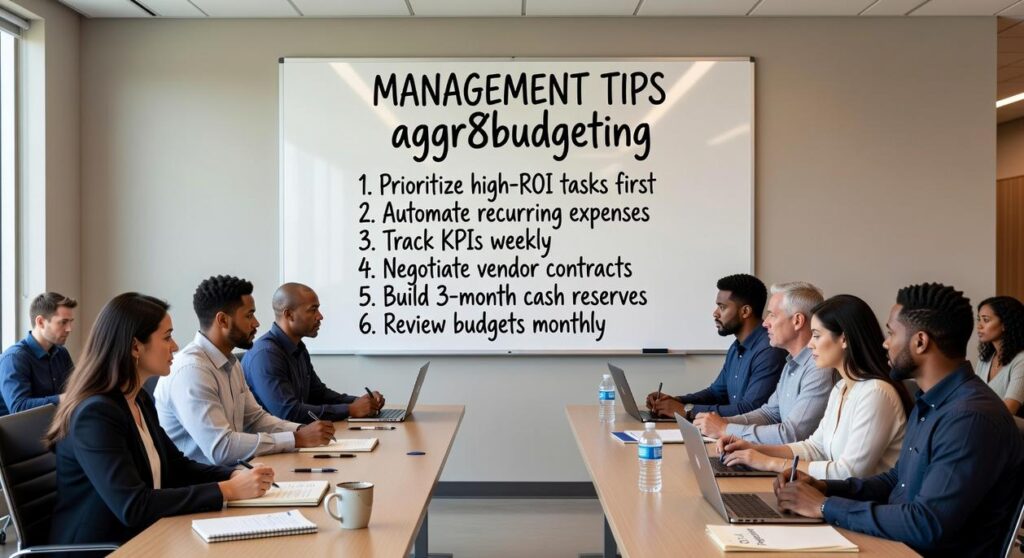
I’ve seen too many managers treat their budget like a straitjacket instead of what it really is: your best argument for getting what you need.
You’re probably stuck doing budget reviews that feel like justifying every pen and paperclip. Meanwhile, your team needs resources and you’re not sure how to make the case without looking like you can’t manage money.
Here’s the thing: budgeting isn’t about restriction. It’s about showing exactly why your department deserves more support.
I work with managers who’ve turned their budgets into promotion material. They use numbers to prove their team’s value and get approval for projects that seemed impossible six months ago.
This guide shows you how to do the same thing. You’ll learn to build a budget that makes your case for you and gives your team what they need to perform.
The strategies here come from years of working with department heads who figured out how to stop defending their spending and start using it strategically. Real approaches that work in actual companies (not theoretical frameworks that sound good in meetings).
You’ll see how to allocate resources in ways that drive results. How to track spending so it tells a story about impact. And how to present numbers that get you a yes instead of pushback.
management tips aggr8budgeting walks you through each step without the usual finance jargon that makes budgeting feel harder than it is.
Your budget can open doors. Let me show you how.
The Strategic Foundation: Aligning Your Budget with Core Objectives
I remember sitting in a conference room three years ago watching a CFO tear apart his team’s budget proposal.
The numbers added up. Everything was there. But he kept asking the same question: “What are we actually trying to accomplish here?”
Nobody had an answer.
That’s when it hit me. Most budgets are just spreadsheets full of expenses. They track what you spent last year and maybe add 10% for inflation. But they don’t tell you where you’re going.
Your budget should be different.
Some people will tell you that budgets are about cutting costs and staying lean. They’ll say you need to trim the fat and run tight. And sure, controlling expenses matters.
But that’s not the whole story.
I’ve seen too many businesses cut their way into irrelevance. They slash marketing when they need to grow. They freeze hiring when they need talent. All because their budget was built around fear instead of direction.
Here’s what I do instead.
I start with the goals. Not the money. If you want to increase market share by 5%, that’s not free. If you’re planning to reduce customer churn by 10%, you’ll need resources to make it happen.
The trick is connecting those goals to actual line items. When you know you need to hit specific KPIs, you can figure out what it costs to get there. That’s capital management aggr8budgeting in action.
Let me walk you through how this works.
Say your goal is cutting churn by 10%. You need to ask what drives churn in the first place. Maybe it’s poor onboarding or slow support response times. Now you can budget for better training or an extra support person.
That’s proactive budgeting. You’re building for what’s coming, not just reacting to what already happened.
And here’s something most people skip entirely. Get your team involved early. When I bring people into the planning phase, two things happen. They spot costs I’d miss on my own, and they actually care about staying on budget because they helped build it.
Your budget isn’t a punishment. It’s a map that shows you how to get where you want to go.
Choosing the Right Model: Three Proven Budgeting Methodologies for Managers
Most managers I talk to use the same budgeting approach year after year.
They take last year’s numbers and add a percentage. Maybe they cut a few line items if times are tight.
But here’s what happens. You end up funding things that don’t matter anymore while starving projects that could actually move the needle.
Some people argue that sticking with one budgeting method keeps things simple. They say switching approaches just confuses your team and wastes time. And sure, consistency has value.
But that thinking keeps you locked into patterns that might not fit what you’re trying to accomplish.
I’ve tested different budgeting models across various teams and projects. What I learned is that the best managers match their budgeting approach to their specific situation.
Let me walk you through three methods that actually work.
Zero-Based Budgeting (ZBB)
This is where you start from zero every cycle. Every expense needs justification.
I use this when I’m launching something new or when I need to shake up a department that’s gotten bloated. You’d be surprised how many costs stick around just because nobody bothered to question them. When tackling inefficiencies in a department that has become unwieldy, I’ve found that implementing Aggr8budgeting can reveal surprising costs that linger simply because they’ve never been questioned.
The benefit? You kill legacy spending that no longer serves you. Your team has to think about what they really need instead of just asking for more.
Activity-Based Budgeting (ABB)
This approach ties your budget to specific activities and what they actually cost.
Say you’re trying to figure out the real cost of producing a product or delivering a service. ABB shows you exactly where your money goes at each step.
What you get from this is clarity. You can spot which activities eat up resources without delivering results. Then you can fix them or cut them entirely. (This is where most managers find their biggest savings.)
Value Proposition Budgeting
Here’s where you fund based on potential return. For additional context, Financial News Aggr8budgeting covers the related groundwork.
I like this for innovation projects or when I’m deciding between competing initiatives. Instead of just looking at costs, you’re asking what value each dollar creates.
The payoff is that you stop treating all expenses the same. A $50,000 project that generates $200,000 in value gets priority over a $10,000 project that goes nowhere.
For more budgeting strategies that fit different management scenarios, check out aggr8budgeting.
The right model depends on what you’re managing and what problems you’re trying to solve. New project? Go zero-based. Need to understand true costs? Use activity-based. Choosing between opportunities? Think value proposition.
You don’t have to pick just one either. I’ve seen managers use different models for different parts of their operation.
What matters is matching the method to your needs instead of forcing your needs into whatever method you’ve always used.
Implementation and Monitoring: Tools and Tactics for Real-Time Control
Let me be blunt about something.
Most budgets fail because nobody actually watches them after they’re created.
You spend hours building this perfect plan. Then you file it away and hope everything works out. That’s not budgeting. That’s wishful thinking.
I’ve seen it happen over and over. Teams create these detailed spreadsheets and then check them maybe once a quarter. By then, you’re already thousands over budget and scrambling to explain what happened.
Here’s my take. If you’re not tracking expenses in real time, you don’t really have a budget. You have a document that makes you feel organized.
Now, some people will tell you spreadsheets are fine. They’ll say you don’t need fancy tools or software. Just update your Excel file every week and you’re good.
I disagree.
Spreadsheets worked when we had fewer transactions and simpler operations. But now? You’re dealing with subscription services that auto-renew, team members making purchases across different platforms, and expenses hitting your accounts at all hours.
You need tools that sync with your accounts automatically. Software that shows you where you stand right now, not where you were two weeks ago when you last updated your sheet. In more specialized environments like education, tools such as school asset management software help track equipment, inventory, and resource usage in real time. This kind of visibility makes it easier for managers to connect physical assets with budget performance and avoid unnecessary spending.
The best expense tracking platforms pull data directly from your bank accounts and credit cards. They categorize spending as it happens. No manual entry. No waiting until month-end to see the damage.
But here’s what matters more than the tool itself.
Variance analysis.
This is where you compare what you planned to spend against what you actually spent. Every week or at least every month.
When you’re over budget in a category, you need to know why. Was it a one-time thing? Did your assumptions change? Or are you consistently overspending in that area?
Same thing when you’re under budget. Maybe you found a better vendor. Or maybe your team isn’t executing on a project they should be working on.
The numbers tell you what’s happening. You have to turn that into action.
I recommend building a simple financial dashboard. Nothing complicated. Just the metrics that actually matter for your operation.
Budget versus actual is the big one. Show it by category so you can spot problems fast.
Your burn rate matters too. That’s how quickly you’re spending down your available funds. If you’re burning through cash faster than expected, you need to adjust before you hit zero.
For teams that acquire customers, track your cost per acquisition against budget. This tells you if your marketing spend is working or if you’re just throwing money away. To ensure your marketing efforts are effective and not just a drain on resources, consider implementing Flexible Budgeting Aggr8budgeting by Aggreg8, which allows teams to accurately track customer acquisition costs against their budgets.
Update your dashboard weekly if you can. Monthly at minimum.
Now here’s something most finance people won’t tell you.
The best budget monitoring system in the world won’t help if your team doesn’t care about costs.
You need to build a cost-conscious culture. Not a cheap culture where people are afraid to spend anything. A smart culture where people think before they buy.
Start by sharing budget information with your team. When people understand the constraints, they make better decisions. Keep them in the dark and they’ll assume money is unlimited.
Make it easy for people to check if something is in budget before they commit to it. If they have to send three emails and wait two days for approval, they’ll just buy it and ask for forgiveness later.
Set spending limits that make sense. Your senior people can probably handle larger purchases without approval. Junior team members might need more oversight at first.
And look, reward people who find ways to save money without sacrificing quality. When someone negotiates a better rate or finds a cheaper alternative that works just as well, recognize that publicly.
The goal isn’t to turn everyone into accountants. It’s to make budget awareness part of how your team operates.
One more thing about monitoring.
Don’t wait for problems to get big before you address them. Small overruns are easy to fix. Big ones require painful cuts that hurt morale and slow down your work.
Check your numbers regularly. Act on what you see. Adjust as you go.
That’s how you keep a budget alive instead of letting it become another forgotten document in your files.
For more practical management tips aggr8budgeting strategies that work in real operations, focus on building systems that give you visibility and control without creating bureaucracy that slows everything down.
Communicating for Success: Using Your Budget to Advocate and Justify
Your budget isn’t just a spreadsheet.
It’s your proof. Your defense. Your ticket to getting what your team actually needs.
I see managers all the time who track every dollar perfectly but can’t get approval for a single new hire. They wonder why leadership says no when their numbers are solid.
Here’s what I’ve learned.
The data alone doesn’t convince anyone. You need to turn those numbers into a story that shows exactly what your team delivers.
The Budget as a Narrative

When you present your budget, you’re not just showing expenses. You’re showing what those expenses bought.
Start with outcomes. If you spent $50,000 on software last quarter, don’t just list the cost. Show how it cut project delivery time by 30% or saved 15 hours of manual work each week.
Connect every major expense to a result. That’s how you make your budget report something people actually want to read.
Justifying Additional Resources
You need more headcount. Or new tools. Or both.
Pull up your historical data. Show leadership where you’ve been understaffed and what it cost the company (missed deadlines, overtime expenses, or lost opportunities).
Then project forward. If you hire two people now, here’s what your team can take on next quarter. Be specific about the revenue impact or cost savings.
The business case writes itself when you have the numbers. That’s where flexible budgeting aggr8budgeting by aggreg8 comes in handy.
Defending Your Department
Cost-cutting season hits every company eventually.
Your well-managed budget becomes your shield. When you can show consistent performance, smart spending, and clear ROI, you’re harder to cut.
Keep a running document of wins tied to budget items. When someone questions your team’s value, you’ve got proof ready to go.
Pro tip: Track the cost per outcome for your major initiatives. It gives you a concrete number to defend during budget reviews.
Reporting to Leadership
Senior management doesn’t want to see every line item.
They want three things. What did we spend? What did we get? Was it worth it?
Frame everything around ROI and how your spending aligns with company goals. If the company is pushing for faster product launches, show how your budget supports that priority.
Keep reports visual. A simple chart showing budget versus results tells the story faster than paragraphs of explanation.
And remember, confidence matters. When you know your numbers and can explain them clearly, people trust your judgment. That’s when you start getting yes instead of maybe.
Using management tips aggr8budgeting principles, I’ve seen teams go from fighting for scraps to getting everything they ask for. The difference? They learned to speak the language leadership understands. By embracing the principles of Capital Management Aggr8budgeting, teams can transform their approach and secure the resources they need to thrive in a competitive gaming landscape.
Mastering the Budget for Lasting Management Impact
You came here to turn your budget into something more than a spreadsheet.
Now you have the framework to make that happen.
Budgeting doesn’t have to stress you out anymore. It can give you control and confidence. It can make you more influential in your organization.
The strategies I’ve shown you work because they connect your financial planning to what actually matters. Your strategic goals. Your team’s performance. Your ability to lead.
When you link these pieces together, budgeting becomes a tool instead of a burden.
Here’s what you should do: Pick one strategy from this guide and use it this month. Management tips aggr8budgeting recommends starting with variance analysis if you want quick results. You’ll see better financial clarity within weeks.
The difference between managers who struggle with budgets and those who master them comes down to one thing. They treat their budget as a strategic asset.
You have the knowledge now. The next step is yours to take.

 Ask Vorric Yelthorne how they got into saving techniques and advice and you'll probably get a longer answer than you expected. The short version: Vorric started doing it, got genuinely hooked, and at some point realized they had accumulated enough hard-won knowledge that it would be a waste not to share it. So they started writing.
What makes Vorric worth reading is that they skips the obvious stuff. Nobody needs another surface-level take on Saving Techniques and Advice, Expense Tracking Tools, Expert Financial Insights. What readers actually want is the nuance — the part that only becomes clear after you've made a few mistakes and figured out why. That's the territory Vorric operates in. The writing is direct, occasionally blunt, and always built around what's actually true rather than what sounds good in an article. They has little patience for filler, which means they's pieces tend to be denser with real information than the average post on the same subject.
Vorric doesn't write to impress anyone. They writes because they has things to say that they genuinely thinks people should hear. That motivation — basic as it sounds — produces something noticeably different from content written for clicks or word count. Readers pick up on it. The comments on Vorric's work tend to reflect that.
Ask Vorric Yelthorne how they got into saving techniques and advice and you'll probably get a longer answer than you expected. The short version: Vorric started doing it, got genuinely hooked, and at some point realized they had accumulated enough hard-won knowledge that it would be a waste not to share it. So they started writing.
What makes Vorric worth reading is that they skips the obvious stuff. Nobody needs another surface-level take on Saving Techniques and Advice, Expense Tracking Tools, Expert Financial Insights. What readers actually want is the nuance — the part that only becomes clear after you've made a few mistakes and figured out why. That's the territory Vorric operates in. The writing is direct, occasionally blunt, and always built around what's actually true rather than what sounds good in an article. They has little patience for filler, which means they's pieces tend to be denser with real information than the average post on the same subject.
Vorric doesn't write to impress anyone. They writes because they has things to say that they genuinely thinks people should hear. That motivation — basic as it sounds — produces something noticeably different from content written for clicks or word count. Readers pick up on it. The comments on Vorric's work tend to reflect that.