
Crypto has a reputation. Wild price swings, overnight millionaires, but also disasters. And, in between, a huge number of regular people silently ask themselves whether it is worth spending a slice of their budget on it.
But crypto does not need to be something to bet on with your rent money. As soon as you see it as any other line in your budget, it stops being scary and starts being something you can actually handle. It only takes a plan, a limit and a place to start.
Start With What You Can Actually Afford to Lose
This isn’t pessimism, just smart budgeting.
The question you need to ask yourself before you buy even a single dollar of any cryptocurrency is: If crypto went to zero tomorrow, would you be okay? If the answer is no, then you are putting in too much.
Most financial planners recommend holding crypto at 5% or less of your investment portfolio. That is a low number for many. And that’s fine. Starting small is still starting.
Assuming that you are using the 50/30/20 rule, consider crypto in the 20% savings and investment category, rather than an alternative to your emergency fund or retirement savings. This is not placed in front of your other investments but alongside them.
Here’s a quick way to think about it:
- Emergency fund well-stocked? Good. Now you can talk crypto.
- High-interest debt cleared? Great. The 20% plus credit card interest is more than any crypto payback.
- Retirement savings looking good? Perfect. Now you’re ready to explore.
Crypto is not to be used as an alternative to a good financial base, but as a complement to it.
Treat It Like a Budget Category, Not a Mood
The biggest crypto mistake is selling when you are scared and buying when you are excited. This isn’t investing, but costly emotional whiplash.
Rather, give crypto its own budget line. For example, invest $50 a month into it. Not $50 when you think about it, not $200 when the hype hits. Only $50, every month, regardless of the market.
This is referred to as dollar-cost averaging. You make the same investment regularly; thus, you will automatically buy more when the prices are low and less when they are high. You are not trying to guess what the market is going to do, and you are not waiting until the right time to act. You just do it. It is simple, steadfast, regular purchases that smooth out the good and bad periods in the long run.
Set it up like a bill, and automate it if you can. Make it like your Netflix subscription – only this one can even grow.
Where You Buy Matters More Than You Think
Not every crypto platform is the same. Fees, security, and reliability vary a lot, and making the wrong decision can silently eat up your returns – or worse, risk your funds.
So when you are starting with a small amount of money with a low budget, the last thing you need is to lose 3-5% of all transactions to obscure charges, or wake up one morning to find the site has cleared withdrawals. These things have happened. More than once.
This is why it is important to do your homework and learn about crypto before you give out your money. In contrast to banks, crypto transactions tend to be non-refundable, and therefore making the wrong decision may be an expensive error. Identify platforms with good track records, which are also regulated and disclose their use of the user funds. Using the safest crypto exchanges is not only advice that beginners should follow, but a simple measure of saving the money you have worked hard to accumulate.
Consider this: you would not wire your savings to a bank you had never heard of. The same should be applied to crypto.
Keep Your Records Clean From Day One
This is where newbie crypto users can get caught up, typically just around tax season.
Crypto is considered a taxable asset in the majority of countries. That is, each time you sell or trade or (in certain jurisdictions) spend it, you may cause a tax event. In the US, you are required to declare gains and losses just as you do with stocks.
The solution is easy: keep track of it from day one. Record the date of purchase, the amount and the price you paid on each purchase. The majority of exchanges enable you to export your transaction history – download those files and store them. Do not believe that the platform will save your data permanently.
If you already budget, this is no different. You track what you spend on groceries and rent—just do the same with crypto.
What to Actually Buy (And What to Ignore)
You do not have to know all coins, tokens and blockchain projects in order to invest well. As a matter of fact, the more complex a crypto investment sounds, the more you should question it.
To the majority of low-end investors, the short list is simple:
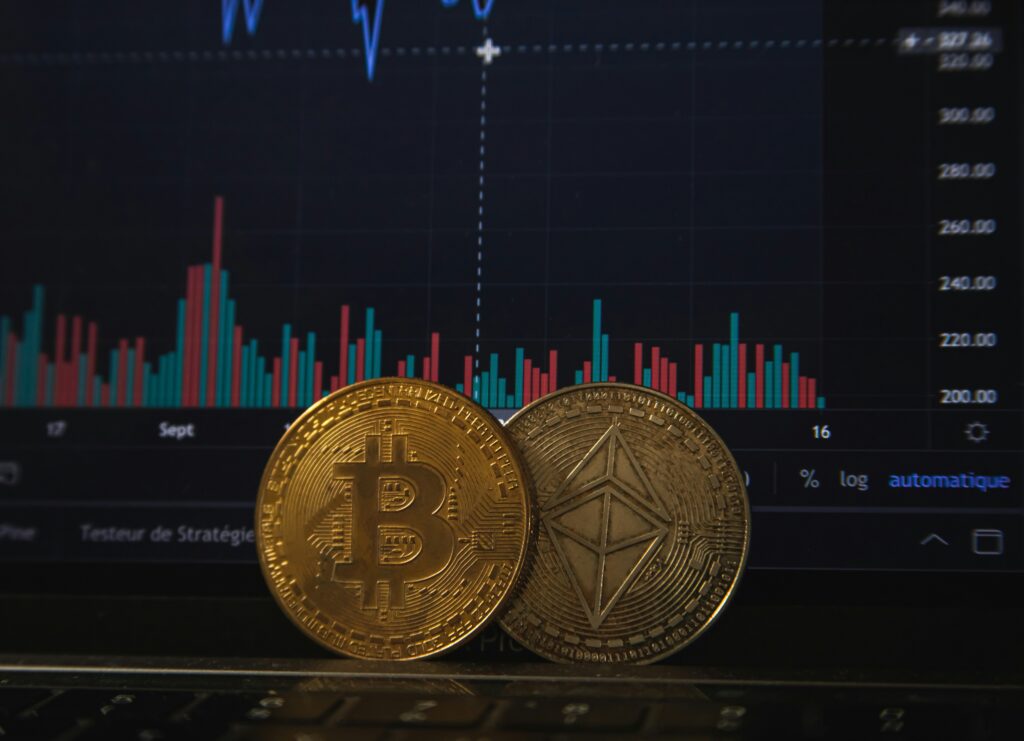
- Bitcoin (BTC): The original. By far the most popular, and the most liquid. It is not going to return 10x overnight, but it is not an obscure project run by three guys in a Discord server.
- Ethereum (ETH): Drives a massive portion of the crypto economy. A volatile and, at the same time, more versatile option than Bitcoin.
Beyond these two, beware. There are thousands of altcoins, and many of them will disappear in five years. When you are investing some budgeted money in crypto, focus on the one with the longest track record and the most users.
And, by the way, when somebody in a Facebook community is betting a coin that has a 100x guarantee, that is not a tip. That’s a warning sign.

 Ask Vorric Yelthorne how they got into saving techniques and advice and you'll probably get a longer answer than you expected. The short version: Vorric started doing it, got genuinely hooked, and at some point realized they had accumulated enough hard-won knowledge that it would be a waste not to share it. So they started writing.
What makes Vorric worth reading is that they skips the obvious stuff. Nobody needs another surface-level take on Saving Techniques and Advice, Expense Tracking Tools, Expert Financial Insights. What readers actually want is the nuance — the part that only becomes clear after you've made a few mistakes and figured out why. That's the territory Vorric operates in. The writing is direct, occasionally blunt, and always built around what's actually true rather than what sounds good in an article. They has little patience for filler, which means they's pieces tend to be denser with real information than the average post on the same subject.
Vorric doesn't write to impress anyone. They writes because they has things to say that they genuinely thinks people should hear. That motivation — basic as it sounds — produces something noticeably different from content written for clicks or word count. Readers pick up on it. The comments on Vorric's work tend to reflect that.
Ask Vorric Yelthorne how they got into saving techniques and advice and you'll probably get a longer answer than you expected. The short version: Vorric started doing it, got genuinely hooked, and at some point realized they had accumulated enough hard-won knowledge that it would be a waste not to share it. So they started writing.
What makes Vorric worth reading is that they skips the obvious stuff. Nobody needs another surface-level take on Saving Techniques and Advice, Expense Tracking Tools, Expert Financial Insights. What readers actually want is the nuance — the part that only becomes clear after you've made a few mistakes and figured out why. That's the territory Vorric operates in. The writing is direct, occasionally blunt, and always built around what's actually true rather than what sounds good in an article. They has little patience for filler, which means they's pieces tend to be denser with real information than the average post on the same subject.
Vorric doesn't write to impress anyone. They writes because they has things to say that they genuinely thinks people should hear. That motivation — basic as it sounds — produces something noticeably different from content written for clicks or word count. Readers pick up on it. The comments on Vorric's work tend to reflect that.